CARBON MONOXIDE (CO) SYSTEM
Carbon monoxide gives no warning of its own. It has no colour, no smell and no taste, and it builds up wherever engines run in an enclosed space — basement and multi-storey car parks, loading bays, service yards, generator and pump rooms, workshops and plant rooms.
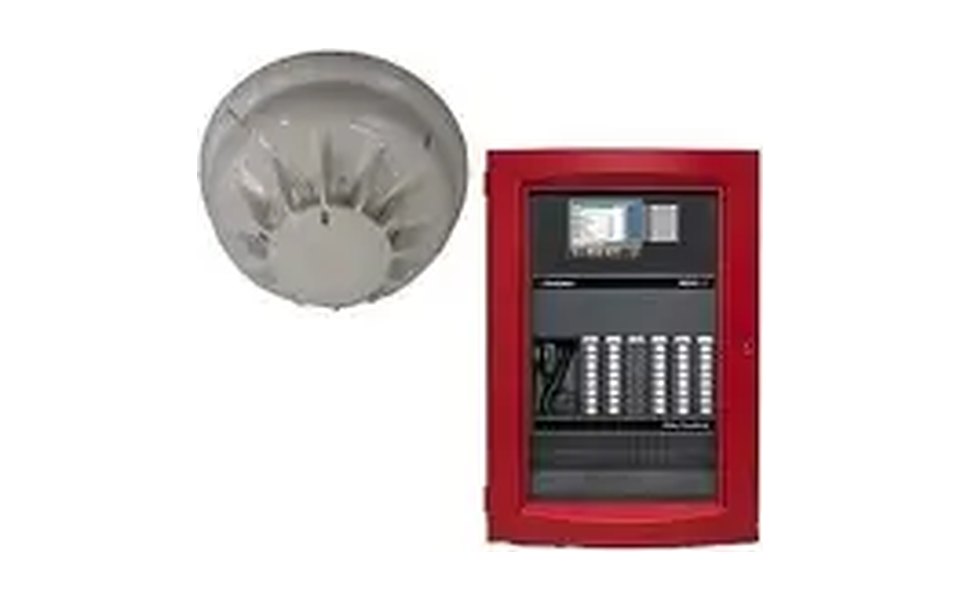
A CO system watches the air in those spaces continuously and does something about it before anyone is affected. Sensor heads distributed through the space report to a control panel; when the reading passes the first threshold the panel starts or steps up the extract fans, and at the second it raises a local alarm and signals the building management system. Ventilation runs on demand rather than continuously, which is why these systems are often specified as much for the energy saving as for the safety case.
Alarm thresholds, sensor spacing and fan response are set to the approved design for the project and to Abu Dhabi Civil Defence requirements.
COMPONENTS OF THE SYSTEM
- CO DETECTORS
- CONTROL PANEL
- VENTILATION INTERLOCK
- ALARM INDICATION
CO DETECTORS
Electrochemical sensor heads mounted at breathing height and distributed to cover the whole floor plate, including the slow-moving and dead-end areas where exhaust collects. Sensor cells have a finite working life and are replaced or recalibrated on schedule, which is the single most important part of keeping a CO system honest.
CONTROL PANEL
The panel polls every sensor, displays live readings by zone, holds the alarm thresholds and drives the outputs. Readings and events are logged, so a persistent hot spot in one corner of a car park is visible as a pattern rather than a one-off alarm.
VENTILATION INTERLOCK
Outputs to the extract fans, starting them, staging them or driving a variable speed drive as the level rises, and stopping them once the space has cleared. This is the working part of the system: in normal operation the fans are off or at low speed, and the CO panel is what decides when they are needed.
ALARM INDICATION
Sounders, beacons and illuminated signage inside the space warn occupants at the high threshold, with a repeat panel at the security or facilities desk and a volt-free signal to the BMS or fire alarm system. STARCO integrates the CO system with the building’s other life safety systems so that a CO alarm, a fire alarm and the smoke control strategy do not fight each other.
COMMISSIONING AND MAINTENANCE
Systems are commissioned with gas testing at every head to prove both the reading and the fan response, and maintained under the same preventive maintenance contract as the fire alarm installation, with sensor calibration certificates issued on completion.